VeloSend vs Send Anywhere: Which File Transfer Tool Should You Use in 2026?
Both are honest peer-to-peer tools with no account needed. Here's where VeloSend and Send Anywhere actually differ once you look past the marketing.
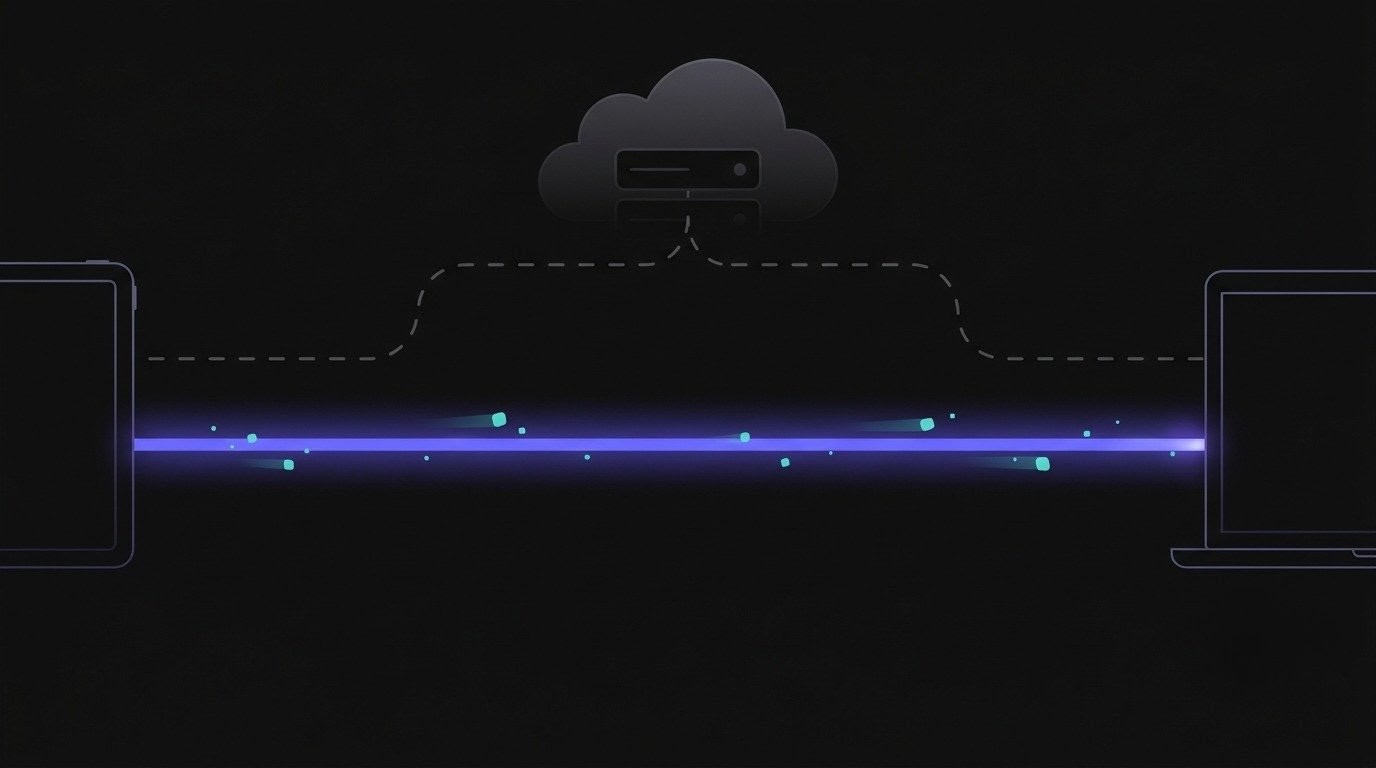
Send Anywhere deserves more credit than most comparison posts give it. Its 6-digit key transfer is genuinely peer-to-peer, requires no account, runs in a browser, and ? as of its current pricing page ? supports transfers with no hard size limit as long as both devices stay online. That makes it one of the closer competitors to VeloSend's own architecture, not a weaker cloud-upload tool. So we're doing this comparison the honest way: where the two are genuinely similar, where they differ, and which small design choices actually matter day to day. Data current as of July 2026.
Quick Verdict
Core transfer method: both ? direct peer-to-peer, no account required, browser-based.
Free P2P size limit: Send Anywhere ? no hard cap in key-transfer mode (both devices must stay online). VeloSend ? 10GB per transfer with no account, 25GB with a free account.
Session/key duration: VeloSend ? room stays open up to 1 hour free (24 hours on Pro). Send Anywhere ? a 6-digit key is single-use and expires in 10 minutes.
Cloud-assisted fallback: VeloSend ? encrypted relay, passes data through, never stores it. Send Anywhere ? separate link-sharing feature that uploads to their servers, ~48-hour retention, 10GB free cap.
Paid plans: Send Anywhere Lite $5.99/month (20GB per link), Standard $9.99/month (30GB per link). VeloSend Pro ? unlimited size and files, 24-hour rooms.
Best experience: Send Anywhere ? native apps on every platform. VeloSend ? browser only, on purpose.
Where They're Genuinely Alike
Both tools get the fundamental thing right: a direct, encrypted, peer-to-peer connection with no server sitting in the middle of the actual file data. Neither requires an account to send a file. Neither installs anything mandatory on the receiving end for a basic browser-to-browser transfer. If you only compared the two on "is this really P2P," they'd tie.
Where the Real Differences Show Up
The gap isn't in the core technology ? it's in the details around it.
Timing pressure: Send Anywhere's 6-digit key is valid for exactly 10 minutes and works once. That means both people need to be ready almost immediately ? generate the key, and your recipient has to enter it right away or start over. VeloSend's room stays open for a full hour on the free tier (24 hours on Pro), so there's real breathing room if your recipient needs a few minutes to notice the message.
The link-sharing trap: This is the one that catches people out. Send Anywhere's "share as link" option is not the same mechanism as the 6-digit key ? choosing it silently switches you to a cloud upload, with Send Anywhere's servers holding your file for roughly 48 hours and a 10GB cap on the free tier. Many users pick the link option because it's more convenient to paste into a chat, without realizing they've left P2P mode entirely.
What happens when direct connection fails: networks that block WebRTC are a reality for both tools. VeloSend's answer is an automatic relay fallback that still behaves like a live transfer ? nothing is stored, the file passes through in real time. Send Anywhere's fallback in practice is its cloud link feature, which means falling back to the storage model above.
One system vs two: with VeloSend, the link and the 9-digit code are two doors into the exact same live P2P room ? sharing a link never changes how the transfer works. With Send Anywhere, the key and the link are architecturally different features with different privacy properties, and it's easy to end up on the wrong one without realizing it.
Full technical detail on how VeloSend's relay fallback preserves the no-storage guarantee: https://velosend.net/blog/how-does-p2p-file-transfer-work
Where Send Anywhere Has a Real Edge
Fair is fair: Send Anywhere's native apps for Android, iOS, Windows, and macOS give it a smoother experience for people who transfer files constantly and want something more integrated than a browser tab ? clipboard integration, background transfers, and OS-level share sheets that a pure web app can't match. If you're doing this dozens of times a day from a phone, that polish is worth something.
Which Should You Choose
You want the simplest mental model, with zero risk of accidentally switching to cloud storage: VeloSend ? link and code are always the same live room.
You need more than 10 minutes to coordinate with your recipient: VeloSend's longer room duration gives real breathing room.
You transfer files constantly from a phone and want a dedicated app: Send Anywhere's native apps are a genuine strength here.
You want zero chance of your file sitting on a third-party server, even for 48 hours: VeloSend ? direct P2P or a pass-through relay, never persisted.
FAQ
Is Send Anywhere's 6-digit key mode actually private? Yes ? in key mode, the transfer is genuinely peer-to-peer with no server storage, similar to VeloSend's architecture.
What's the catch with Send Anywhere's free plan then? The catch isn't the key mode ? it's that the more convenient "share as link" feature quietly switches to cloud storage, with size caps and a retention window that don't apply to the key mode.
Does VeloSend have a native app? No ? VeloSend is intentionally browser-only on both ends, so there's nothing to install or update on either side.
How long can I wait before my recipient joins a VeloSend room? Up to 1 hour on the free tier, or 24 hours with a Pro account ? compared to Send Anywhere's single-use 10-minute key.
The Verdict
Send Anywhere's key-transfer mode earns real respect: it's honest peer-to-peer, no account needed, and technically comparable to VeloSend where it matters most. The reasons to pick VeloSend instead come down to the surrounding experience ? a single unified room instead of two different features with different privacy models, a full hour (or a full day on Pro) instead of a 10-minute window, and a relay fallback that keeps the no-storage promise instead of quietly becoming a cloud upload. If you value predictability as much as the underlying technology, that's the difference that matters.
Try a live P2P room with no time pressure at https://velosend.net/app ? no account, up to 10GB free. New here? Start with https://velosend.net/blog/what-is-velosend See Free vs Pro plans at https://velosend.net/pricing.